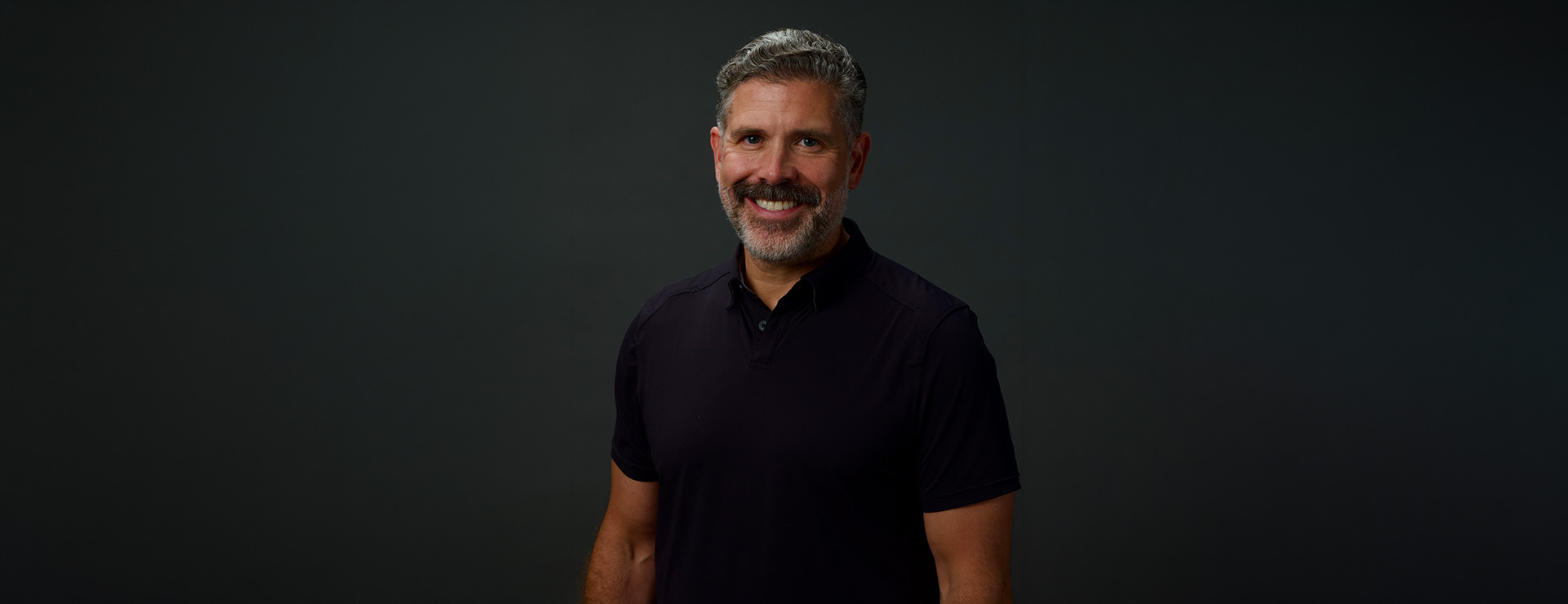
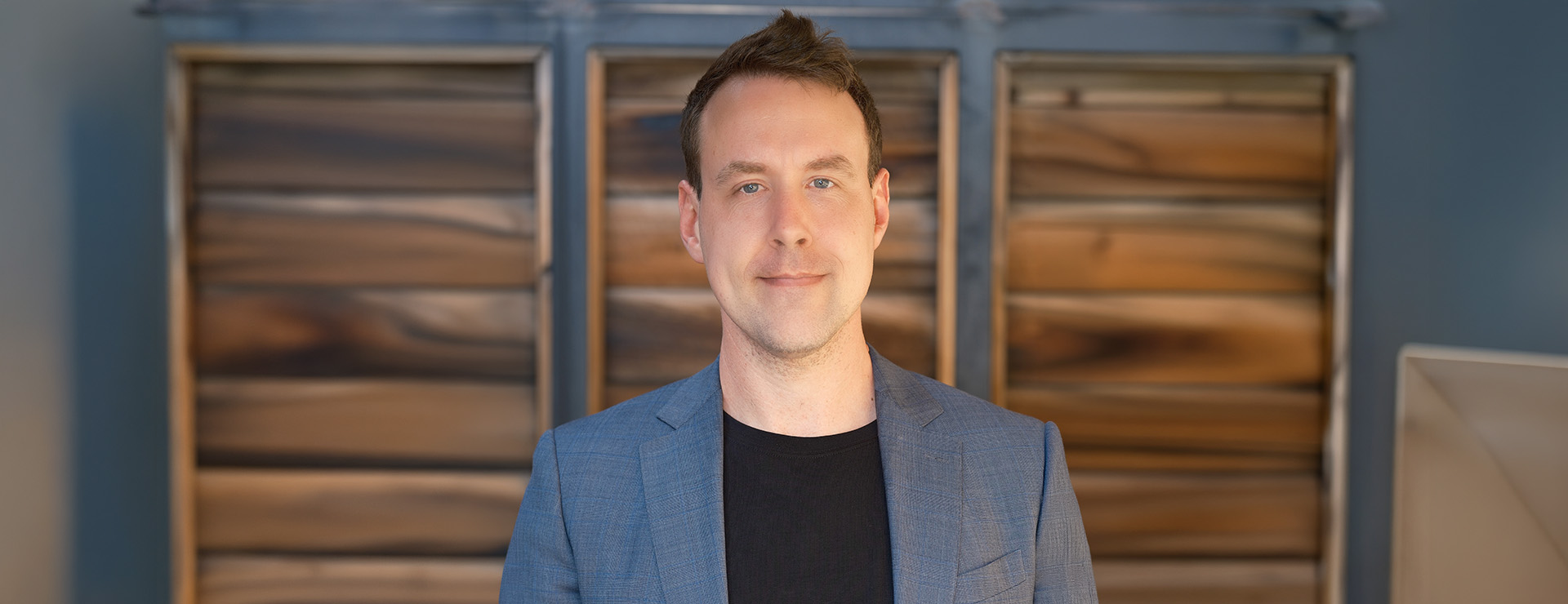
Aaron Sisto isn’t your typical entertainment executive. Armed with bachelor’s and master’s degrees in mechanical engineering from Purdue and a PhD in machine learning and quantum simulation from Stanford, Sisto has spent most of his career working in venture capital in and around Silicon Valley.
Now, he has taken his experience in deep tech and married it with his passion for pop culture to form San Francisco-based Chronicle Studios, which has developed an agentic AI-driven platform to help match audience with creators across today’s very diverse and fragmented media landscape.
Sisto joined Spotlight to have a fascinating, albeit nerdy, conversation explaining just how this high-tech approach to marketing works to help creators succeed.
Spotlight: You’ve spent a lot of time deep in the world of AI as it was developing. Where do you see AI fitting into the media ecosystem?
Aaron Sisto, co-founder and CEO, Chronicle Studios: I hear a lot of folks in San Francisco talking about AI as a way to disrupt traditional Hollywood. That’s sort of the mentality up here – the idea that the next Pixar is going to be completely AI automated top to bottom. But after being in this world, investing in it and seeing the technology, I don’t buy it. If you look at how Pixar originated, it wasn’t just the technology stack. It was incredibly talented creators and storytellers using technology in a different way.
Coming out of all of this is the question of where AI is actually valuable in media? Where is it really going to move the needle? What my co-founder Scott [Greenberg, former CEO and co-founder of Bento Box Entertainment] and I came up with is that content isn’t actually the pain point or the bottleneck. It’s marketing and distribution. The tectonic shifts in media over the past 10 years are really on that side of the equation.
Audiences now live in completely different places. They live on these social platforms that the studios don't control, and because of that, the studios are no longer the gatekeepers. The platforms and algorithms are.
The velocity and the volume of content on these platforms has gotten to the point that the entropy is so high that it doesn't even matter if you're the biggest brand in the world, you're still competing against a volume and quality of content that makes discovery almost impossible.
You're not going to break through the noise if you try to go at it using a traditional marketing approach. That's the big sea change that I think is just wreaking havoc.
When we started the company, we knew that this would be the perfect application for AI. It's a problem that no one person can really put their finger on because it's such a complex ecosystem of ads and audiences and platforms and algorithms, and it's all shifting all the time. The only way to be successful, in our minds, is via an agentic platform that works with the creators, the studios and the brands to make sure they're successful on social. Without that, you are relying on lightning in a bottle. Everyone knows they have to be on social. They know that's where their audience is, but they have absolutely no control over their success.
Spotlight: Does your technology only work on YouTube or does it work across other platforms like TikTok and Instagram?
Sisto: We work across all platforms. YouTube is the primary platform because that's where creators are most successful in monetizing. That's where brands need to be, because that's where all the attention is. YouTube is the new TV.
Spotlight: How does your platform make use of agentic AI?
I'm really excited about bringing agentic into the worlds of Hollywood and media. In San Francisco, agentic AI is the only thing anyone's talking about.
In AI, there’s this intelligence layer, which is what Chat GPT and all of those models are, and then there’s a new layer on top of that allows you to automate more complex tasks and more human-level work. We’re not trying to put anyone out of work. It’s more about how we make these things useful so you aren’t having to type into a chat window every time you want to do something complicated. AI agents can understand the context and goals of a project and run it to the end, like a colleague would, checking in to make sure it was done correctly. That’s how we view this next phase of automation of marketing and distribution. You will basically have an assistant that will go take care of all of the really technical, complicated work and then come back to you.
If you have to touch a keyboard at any point to try to stay up to speed with your audience or with the algorithm, you're already behind. The algorithms are non stop. They work 24/7 and they make decisions in milliseconds. Agentic AI is not a ‘nice to have.’ It's essential to be competitive because you're competing against other computers. If you're trying to manage your YouTube channel, you're competing against other creators, but you're also competing against automated systems. You should not be doing that by hand anymore. It's too fast and too complicated.
Spotlight: Does Chronicle’s technology just plug into Google’s analytics?
Sisto: Yes, the way our platform works is we plug in and then it’s like the full self-driving car of channel management. That's the highest tier of our platform. When we partner, we plug in, and that can take care of every single part of the process going forward to drive growth. Growth can mean channel growth. It can mean bringing real fans to your channel. It can mean driving revenue growth. It can also be about conversion. If it’s a consumer products company, this would drive people to their e-commerce site. If it’s a games company, maybe it’s driving them to Steam to download an app. For a media company, it might drive them to an SVOD service.
If I were to sum up how brands and creators are starting to think about social, it’s as a top-of- funnel function. That’s where everyone is and they’re highly available if you can put the right content in front of them. The goal is really to find the fans and bring them to a destination where they are engaging with your brand and in the worlds you’re creating.
Spotlight: How does that work?
Sisto: We have analyzed over 99% of view data on YouTube, specifically, but also across all platforms. We look at YouTube as a cultural atlas. We understand which audience cohorts are interacting with which types of content, all the way down to how different thumbnails work best for different, specific audiences.
I'll give you an example: for a food channel you might assume that you should just be talking to audiences on competing food channels. You might go for the big five that you know about, but you might not realize that there's a whole pool of audiences out there on sports channels, and on lifestyle channels more broadly. You're not tapping into them because you don't understand who they are, what they want, what they like, and what they're used to. You don't understand how your content should hook them and bring them back to you.
We're basically the easy button for connecting content with the right audiences. What we're doing is constantly predicting which cohorts will actually respond to specific content. We'll go and generate thousands of variants of each video and thumbnail, and we'll test them against thousands of different audience cohorts on different channels with different demographics. Those retention tests tell us that we've discovered a whole population of audience that has never been exposed to your channel. Now, because we know exactly who they are and where they are, we use what we call micro-targeting. This is in parallel with driving organic traffic through optimization. We also go and put the content in front of those audiences. It's not an ad, it's connecting an audience with content in their feed that they're already looking for.
That's when we see we're driving really high retention numbers because people are clicking. They watch the whole thing, they go to the channel, they watch more videos and then they go to the store and buy something. That's the full pipeline. When we plug in, we look at a channel, we look at what's working and what isn't, and then we generate a strategy. From that strategy, we launch into optimization and audience, discovery and acquisition. That’s why we say it's the full self-driving car, because this is everything you would need to do manually if you wanted to be successful. But without the data and without the automation, those audience, discovery and acquisition pieces are impossible. It's just not possible to do all of that manually.
Spotlight: Beyond helping determine potential audiences, you are also automating the buying of advertising online?
Sisto: Yes, we've automated the infrastructure for Google ads and Meta ads all the way down to the lowest levels. The difference is that I think the platforms nudge you to use ads in a certain way, which is spray and pray. You pay X dollars for X impressions and hopefully some of those are fans. I think the general consensus is that it's a very low [return on investment] and expensive way to work.
Many creators don't have the ability to just buy ads and cross their fingers and hope their platform grows, and they're not going to grow their channel like that anyway. What we do is different, because we've already analyzed these cohorts, and we understand matching them at a basic and granular level. We do this over tens of thousands of micro cohorts.
It's a different approach, because if you don't know that an audience on that channel or on that video is actually primed to come and watch your content, you have no idea that you need to place your content in front of them.
You actually need your own recommendation algorithm that works for your brand and your channel to enter into the advertising ecosystem at that level.
Spotlight: How does this approach impact truly organic discovery? Does it make things so targeted that you never get the chance to just bump into something new?
Sisto: I think the socials today are already moving that direction, because more and more, I think they drive you into a bit of a bubble in which you see the same content over and over. But there will always be an opportunity for a friend or family member to send you something you’ve never seen before that you love.
I think the algorithms don't take into account that fandom exists.
Algorithms were not built to cultivate fandom.
They were built at an individual level to keep people engaged and on the platform. Ultimately, what that does is help sell ads.
Social is the proxy for what's going on in your life. In many ways, that's what we're building. We're breaking through the algorithm, which is very much a barrier for the consumer and for the brand, and we're trying to connect them more holistically. I think the only way to do that is by building it outside of the ecosystem because the algorithms don't talk to each other. Meta, TikTok, YouTube, they are all siloed ecosystems. They're highly incentivized to keep their audiences where they are, but as a brand, you have to be everywhere.
Spotlight: Bluntly, how do you make money doing this? What’s your revenue model?
Sisto: There are two ways to think about this. As an early-stage startup, our number-one priority is to prove that the technology works. That's still the number-one priority for us in as many different genres and across as many different customer segments as possible. Alongside that, it's proving that there's demand for what we're building and that we can scale. That's why we're targeting going from 50 channels today to 10,000 plus by later this fall. We have a number of partnerships we haven't announced that are pretty massive that are going to get us there. If we can prove that we can grow value in 10,000, 50,000, 100,000 channels across social simultaneously, because of how we've automated this, that's a massive breakthrough. That really is kind of a revolutionary product.
At the same time, we get into pricing and revenue conversations with every single one of our partners, because these are real partnerships, whether it's a creator or a big company. I'd say we have two basic models for monetization. On the indie creator side, it's well known that creators don't pay for software. We built this to help them, and so we don't charge them a subscription fee. The deal that has been very favorable and that we've tried to make incredibly creator-friendly is we want to share in the uplift. If we can take your channel from here to here, we don't touch your baseline. If you're already doing $100,000 a year in revenue on your channel across merch and ads and sponsorships, we don't touch that. But we want to help you grow. So if we take you from $100,000 to $500,000, we share in a small amount of that revenue. Ultimately, we want to partner with you for the long term. We can invest into your channel. We can invest into your brand. We can help you start to grow and expand.
On the brand side, with consumer brand studios and big media companies, it's much more traditional in that it's a platform subscription. It's software that plugs in your channel and automates it. You're paying a monthly subscription. And then there's usually some kind of affiliate or rev share on top of that, if we're driving specific conversion and audience acquisition and sales. Those are the two buckets for us. They're very strategic, because creators are super high volume. There are many more of them out there, but we want to work with them in a different way.
Spotlight: How do you think Hollywood should be approaching the creator economy? I feel like studios really want in on it, but I feel like they bring a studio approach. I don't think people on social want to see studios produce that content, I think they expect to see it elsewhere. I think the beauty of the creator economy is that it feels authentic, raw and individual and it’s not super produced.
Sisto: That's the magic of it. The things that take off, they take off because the creator has a really unique vision. The creator is allowed to have taste. They know what they want to make, and they have an authentic connection to their audience and their community, and that's the thing that you can't really manufacture.
From my outsider's perspective on the culture, I view the creator economy from more of a venture angle, like creators should be regarded as founders. They're taking on a ton of risk. It's a ton of time and effort to go and build something. If you look at it from that perspective, the traditional Hollywood deals make zero sense for creators. Whether that’s a development deal or trying to own that IP and put a whole production team around it that may or may not align with the creator's vision. That's actually steering it in a direction that won't be successful on social. It's no longer authentic. It's no longer creator-led. There's no direct connection with the fan base, because now it's a big studio, and big studios don't have that intimate relationship with the fans around a specific IP. If they want to embrace the potential there – and there's massive potential with IP in the creator economy – I think they have to look at it more like a partnership, where the creator has to be incentivized to continue to do what they do, both economically, but also creatively.
When we work with creators, we don't give them notes. There's no creative feedback. We're not trying to tell them, ‘you shouldn't tell that story because people won't like it.’ That's not our job.
We can help them tell their stories in the right format, help promote them in the right way and optimize the content to find the audience. Ultimately, that story is going to live or die based on whether people really want to watch it and whether they want that connection with that creator.