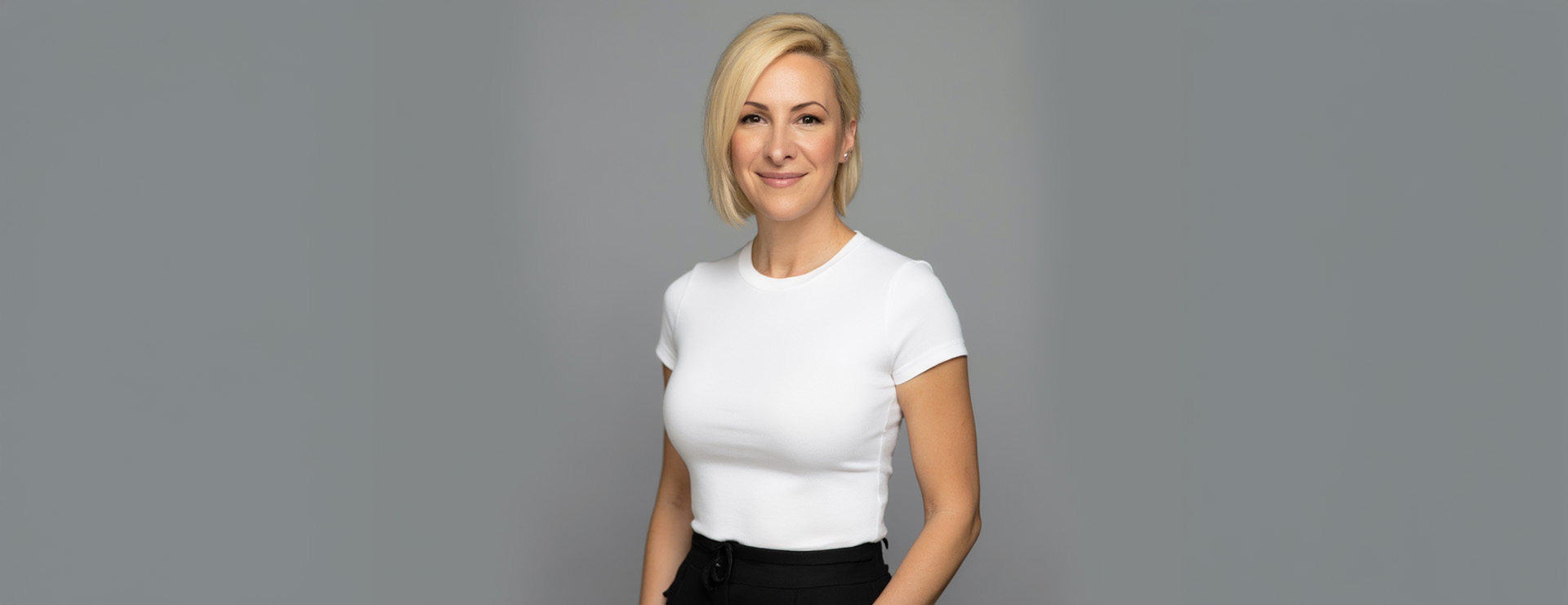
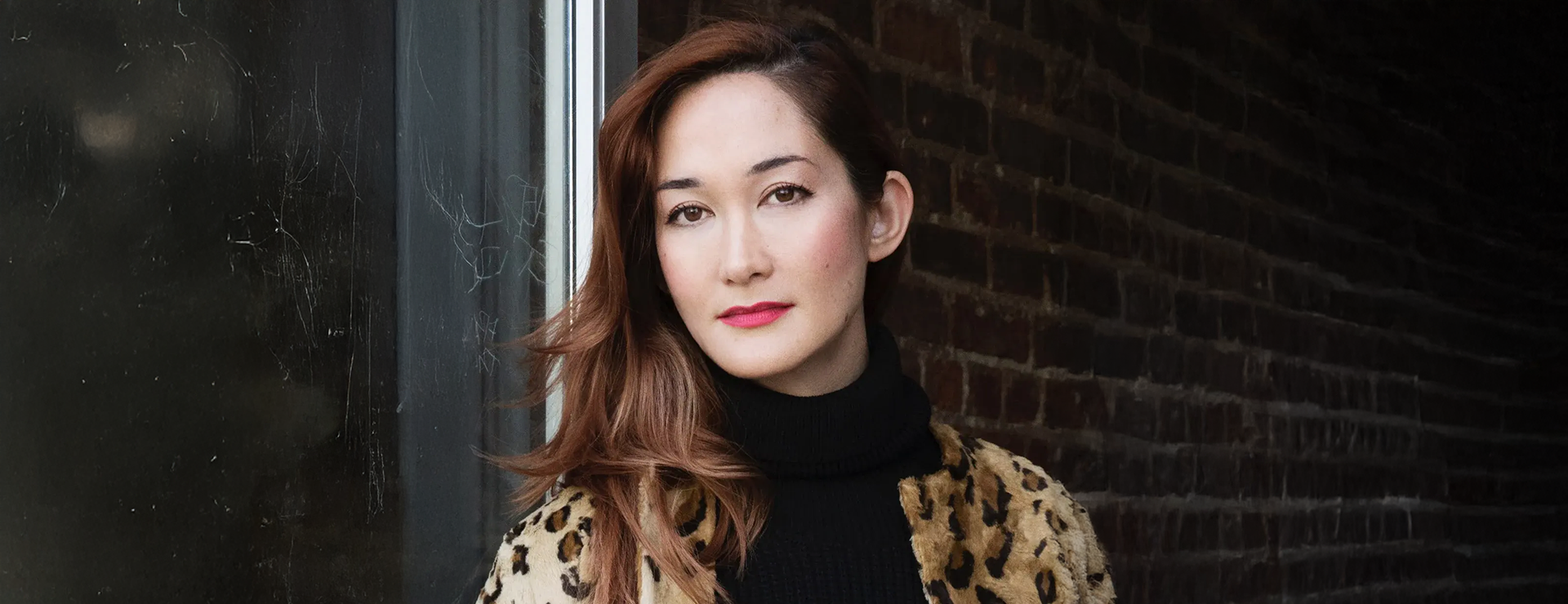
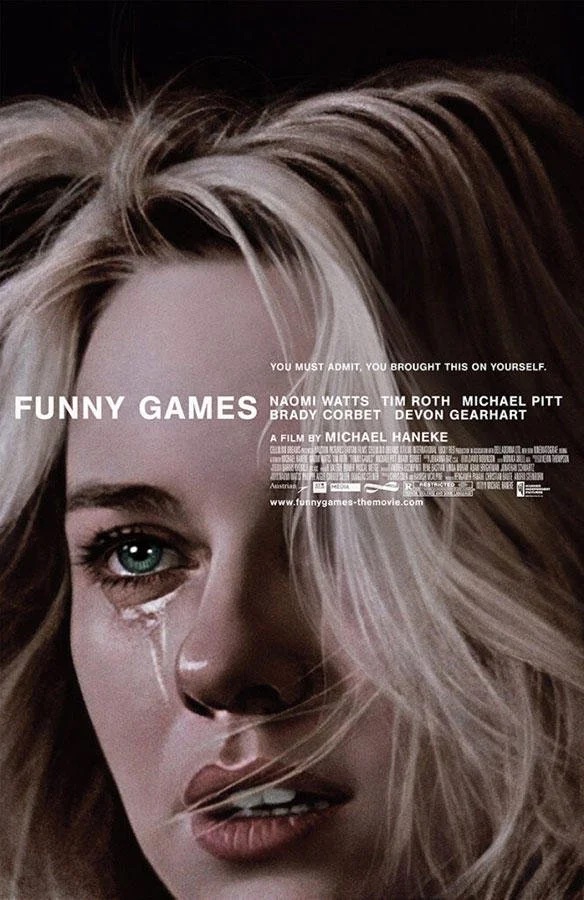
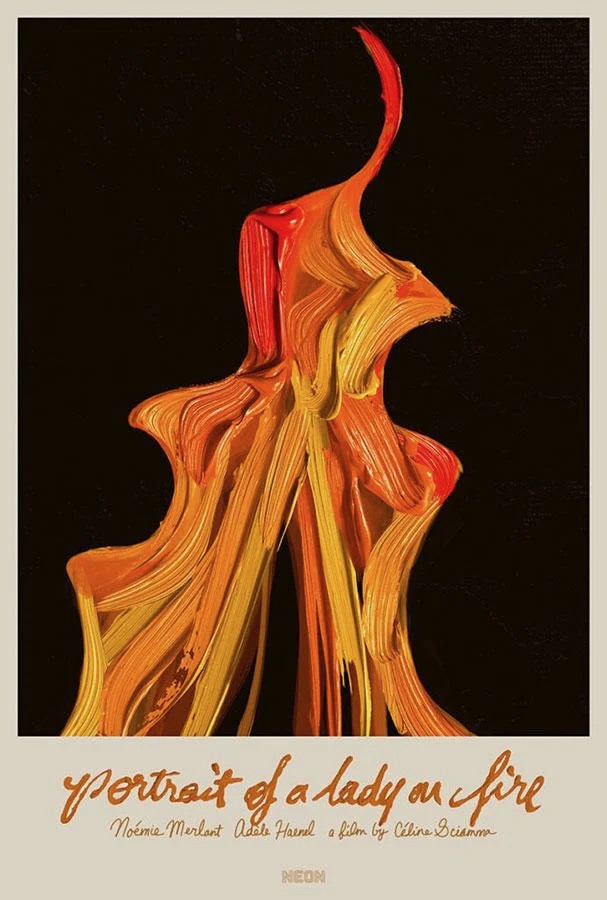
Akiko Stehrenberger is an artist living the dream, combining her fine art skills and talents with commercial viability as one of Hollywood’s premiere movie poster art directors, illustrators and designers. Deemed “Poster Girl” by Interview magazine in 2011, Stehrenberger has created posters for such films as Funny Games, starring Naomi Watts; The Substance; Dune; Portrait of a Lady on Fire; and one of this year’s most Oscar-nominated films, One Battle After Another. Her posters aren’t necessarily always the one you see on theatre walls but they are always works of art that stand on their own – so much so that her poster for Spike Lee’s Da 5 Bloods is on view at the Academy Museum of Motion Pictures.
Among her many clients are A24, A&E Networks, Absolut, Amazon Studios, AMC Networks, The Duplass Brothers, Focus Features, FX, HBO Max, IFC Films, JPL/NASA, Lifetime, Lionsgate, Magnolia Pictures, Neon, Netflix, Paramount Studios, Porsche, Saatchi & Saatchi NY, Showtime, Sony Pictures, Studio Canal, Weiden + Kennedy Amsterdam, Weiden + Kennedy Portland and many more.
Stehrenberger joined Spotlight for a chat about her work via email.
Spotlight: I’m sure this is the question everyone asks you: How did you get into the dream role of designing movie and TV posters? Was that always your goal or did you sort of fall into it? If that wasn’t your original goal, what did you initially think you wanted to do with your art?
Akiko Stehrenberger, movie poster art director, illustrator and designer: I went to art school with a focus on editorial illustration. After graduating, I moved to NYC, where I did freelance spot illustrations for entertainment and music magazines alongside my multiple day jobs. Four years later, when my student loans could no longer be in forbearance and my mom got sick, I decided to move back to LA. I was looking for any full-time job with hopes of maintaining freelance illustration on the side. A friend told me about a receptionist position at a movie poster advertising agency. During my interview, I brought that month’s Spin magazine, which had one of my illustrations in it. Instead of answering phones, the owner suggested I try being a junior designer despite having almost no computer skills. We agreed on a three-month trial and I expected to be fired daily. Somehow those three months eventually turned into a full-time position and completely changed my trajectory. Coincidentally at the same time, magazines were moving online and budgets were shrinking. The timing was perfect to pivot but my editorial illustration background became a big asset. It gave me a skill for distilling a story into a single image. The rest is history and no one has managed to fire me 22 years later.
Spotlight: Without revealing too many of your secrets, what is your approach to creating posters so that you are capturing the essence of the story?
Stehrenberger: I’m not worried about giving anything away. I’ve learned that even with the same information, everyone arrives at something completely different. I used to take notes while watching a film or show, but eventually stopped. I realized it was more important for me to absorb the overall theme than get lost in the details. My process is about finding the broad strokes first: the concept. The details come later, with how I choose to illustrate it. I believe the style of illustration can communicate just as much and help amplify the concept.
Spotlight: Do you do all the ideating or do you work in collaboration with the director and/or the studio?
Stehrenberger: I pride myself on handling all the ideation. I’m not just an illustrator, I’m also an art director and designer. While clients sometimes come in with a very specific direction, I still develop concepts that fit within that framework and try to stretch it as wide as possible without ignoring their goals. And if there’s an idea I feel strongly about that falls outside of that, I’ll usually show it anyway. Many of the pieces I’m most proud of came from pushing beyond the directive.
Spotlight: It’s an interesting time in content – it’s sort of the best and worst of times because there’s more content than ever before but that same fact means more fragmented – and thus smaller, in many cases – audiences. What are your thoughts about movie/TV/music posters and other similar promotional assets and their continuing role in marketing these creative products?
Stehrenberger: I like this moment in marketing because the demand for more content has eased the pressure to please everyone with just one single poster in a marquee. Instead, campaigns can reach different audiences in fragments. Clients often ask me to do something less traditional specifically to connect with a more artistic or conceptual audience. There’s also a good chance they’re putting out a more mainstream poster independently from me, so this gives me more creative freedom.
Spotlight: What role do you feel a poster plays in driving people to consume the media that it’s promoting?
Stehrenberger: Posters may be becoming a dying art as fewer people go to theaters. With trailers, stunts and immersive advertising competing for attention, a single still image doesn’t always carry the same weight. But there are still people who hang posters on their walls. I think of it like photographs: you can have thousands of digital images on your phone, but the few physical ones are the ones you truly revisit and remember.
Spotlight: The tools people use to design have changed quite a bit since you started doing this professionally. How has the way you design and create changed over the years?
Stehrenberger: When I first got into this industry, Quark was on its way out and all posters were being designed in Photoshop. Decades later, not much has changed with the way I work. Everything I do in Photoshop could probably be done in its earliest versions. I don’t use many bells or whistles nor do I use Corel Painter. Part of me wants to keep my process close to analog so I don’t lose my traditional chops. That said, deadlines and demands have become more intense. My illustrated posters are always competing with photographic ones from other agencies. Because of this, I build my files to be flexible and easy to revise quickly, so I can stay in the race.
Spotlight: Are you someone who likes to use technology to create or do you prefer to create in physical media?
Stehrenberger: It depends on the project and the tone I’m aiming for. For some genres, I paint by hand and scan the work in. For others, I work entirely digitally. Being adaptable and versatile allows me to work on all types of projects. I believe the painting technique can communicate a film’s tone almost as much as the concept itself. Every part of my work is intentional and carefully considered.
Spotlight: What are some of your preferred techniques for creating?
Stehrenberger: I have my go-to Photoshop brushes and use a lot of paint textures I make and scan in. What I’ve been doing more of lately is painting things in black and white, so I’m focusing on value and form first. Then I use curves (adjustment layer) to paint in colors on top of it. Curves is my best friend forever.
Spotlight: As an artist, what are your feelings about AI? Do you use it at all in your work? Do you think AI would ever take over the craft of creating posters?
Stehrenberger: AI isn’t going anywhere. As unsettling as it can feel, it’s wise to adapt, understand and utilize it, or get left in the dust. In art school I dismissed digital art as a fad. When I became a junior designer, I learned Photoshop on the job, initially keeping it separate from my personal work. Over time, it became just another medium and a way to get to my goal faster, but it will never be a replacement for me.
So far, AI hasn’t affected my work directly, though I feel for sketch and storyboard artists. I’ve started using it as a tool to help with references for my eventual illustration. I used to spend hours frankensteining bits and pieces of things together I found online. It’s still a reference, not a substitute and I paint everything you see in my poster. I just get there a bit faster than I did before. Of course I’d be totally naive to think my job won’t be in jeopardy, with the rapid way AI is advancing. When that time comes, I’ll just have to pivot the way I’ve had to pivot a few times in my creative career already. I’m also starting to buy lotto tickets, just in case.
Spotlight: Your work has been captured in a beautiful book, Akikomatic: The Art of Akiko Stehrenberger. What has that been like to have a whole book published specifically about your art?
Stehrenberger: The first edition was bittersweet. I didn’t think anyone would care, and at the time it felt like my kiss goodbye to the industry. I was burned out, uncredited, and unsure of my next pivot. A director I’d worked with suggested a monograph as a kind of farewell.
Coincidentally, a few months later, another director connected to a publisher, Hat & Beard Press, suggested the same and they asked me to do a book. Suddenly, I was spending a year combing through hundreds of posters to decide what belonged in the book. At first, I wanted to revise them, make them better since I was constantly growing. But then decided that they should just be markers of time and my ongoing creative transformation.
The process was mega-anxiety inducing, and the release even more so. I’d always stayed behind the scenes and didn’t even have an Instagram. I finally decided to create a profile to introduce myself and help spread the word about my book. To my surprise, the book, and the response to it, brought an overwhelming amount of love and encouragement. Many people do care and it reminded me that with all my gripes and sleepless nights because of it, at the end of the day, everyone loves movies. It also finally connected a lot of my work that people were familiar with to my name.
Spotlight: The summary of that book mentions that you are working on non-movie/TV-oriented art, perhaps for a gallery show. How is that going?
Stehrenberger: It was great! Since the release of the book, I’ve had four solo shows. I guess it felt differently to me because I wasn’t trying to survive on doing fine art alone and movie posters were keeping my lights on. I used the opportunity to merely show a window into my brain without pressure to sell it. The book, having an Instagram, and then art shows couldn’t be more opposite from my personality. I love keeping to myself and the idea of schmoozing makes me want to barf. But I stepped out of my comfort zone and can’t be more thankful for where I am now because I put myself out there. It took a while for me to realize that no one is going to know what you do unless you tell them. When I first graduated art school, I was showing my portfolio to as many people as I could consistently and printing promo cards. With social media, it’s so much easier to get eyes on your work and you’d be a fool to not take advantage of it.
Spotlight: What have been some of your favorite posters that you have done over the years?
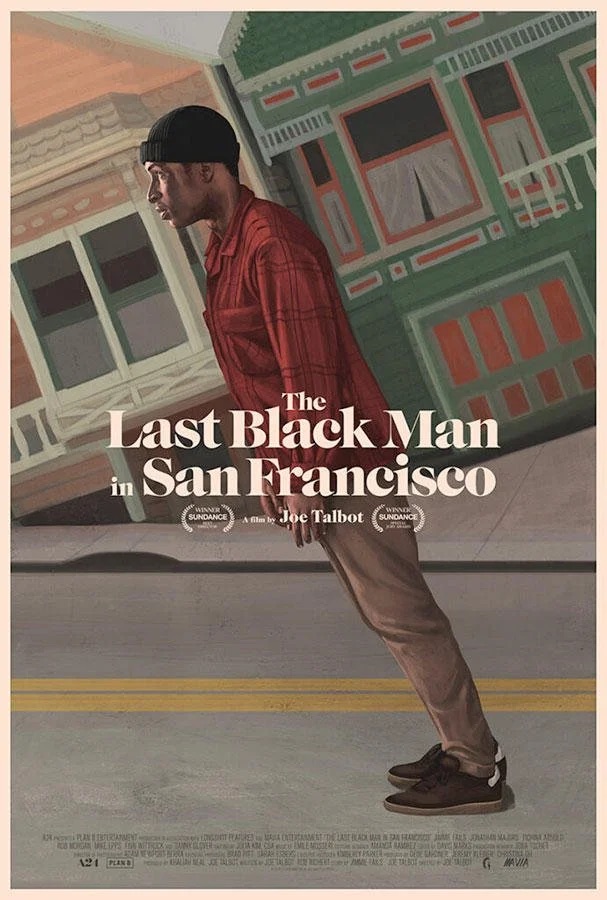
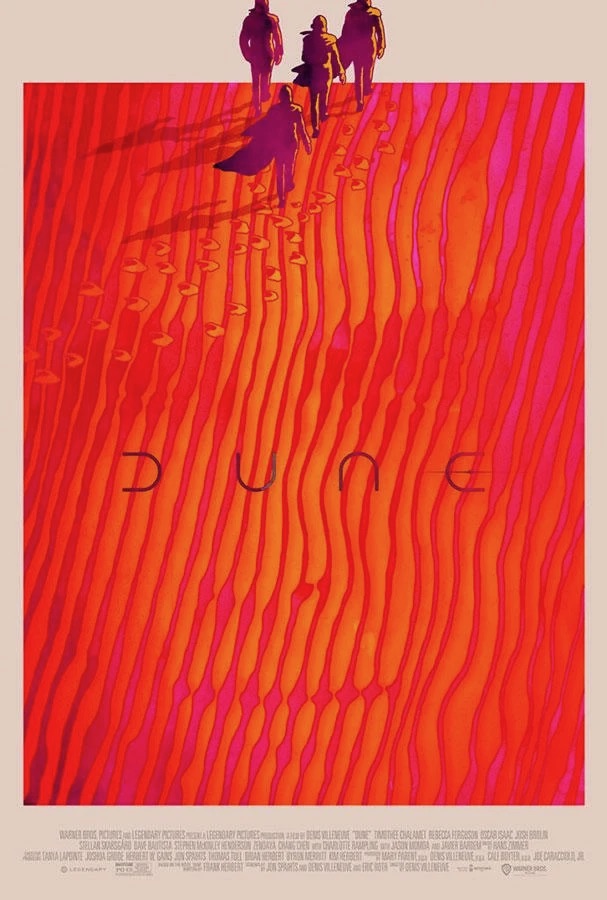
Stehrenberger: The posters I look at fondly are not only for the art itself but also for the process: Funny Games put me on the map and was my very first digital illustration. I’m proud of how simple Portrait of A Lady On Fire is and people loving it even without noticing the kissing silhouettes. I’m also proud of The Last Black Man in San Francisco because I steered the client away from showing the cliched Golden Gate Bridge and found a more unconventional way to represent SF while adding an extra conceptual layer. The folks previously at Mondo wanted me to do a Dune poster. I was hesitant to say yes because I didn’t want to illustrate an elaborate scene with a giant butthole-faced sand worm. They told me that’s exactly why they wanted me, for a completely different take. Unexpectedly, it was well received and became a great crossover to the print collector world. These are my favorites but people also like Beef, The Last of Us and The Substance.
Spotlight: Do you have any projects coming up that you can talk about?
I am currently working on nine projects at the same time and barely sleeping. I am not at liberty to say what they are just yet, but just know I’m exhausted and seeing my chiropractor more than my bed.