
No one really knows what producers do – except perhaps producers themselves – but the role is evolving and expanding right along with the entertainment industry.
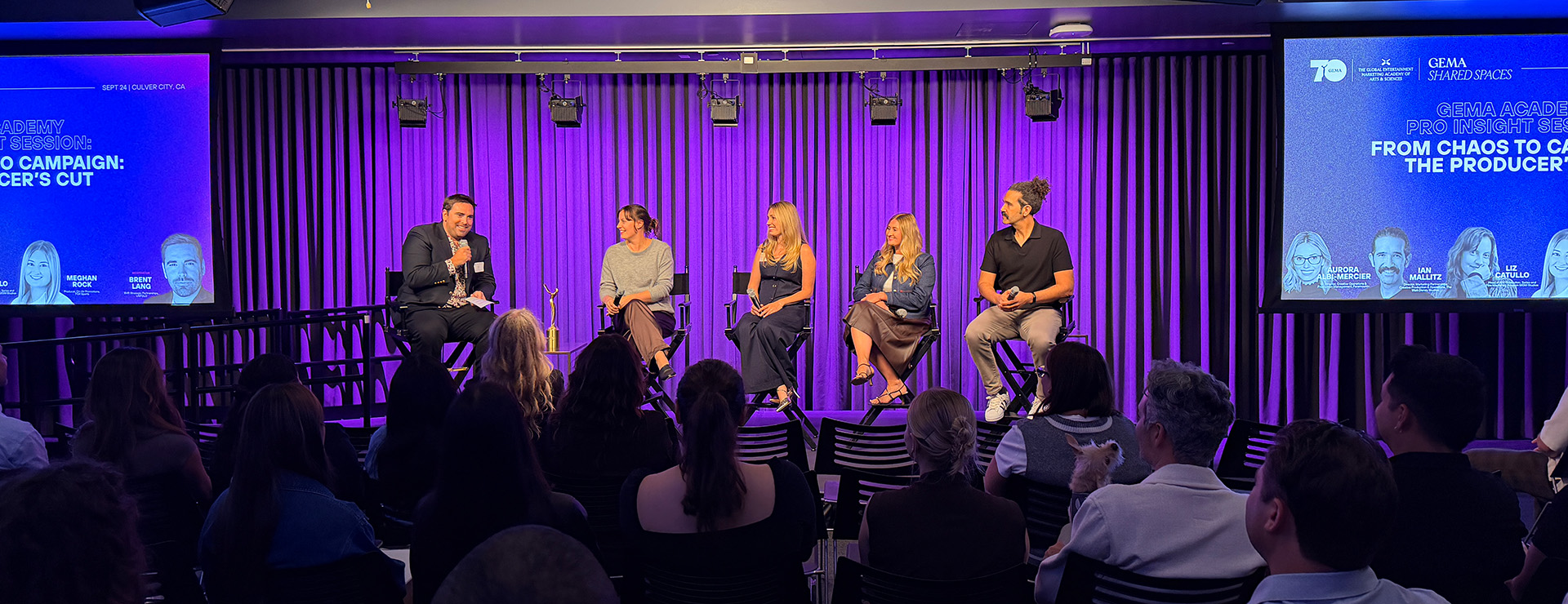
On Thursday, September 24, the GEMA community gathered at Culver Studios for a session of GEMA Shared Spaces. Hosted by Prime Video and Amazon MGM Studios and sponsored by Unfold, the evening kicked off with an insightful panel discussion examining the changing responsibilities and strategic impact of modern entertainment producers.
Moderated by Brent Lang, SVP of strategic partnerships at Unfold, the session titled “From Chaos to Campaign: The Producer’s Cut” featured leading production voices from across entertainment marketing: Liz Catullo, head of A/V Production, series and film marketing at Amazon MGM Studios; Aurora Albi-Mercier, senior director, creative operations and production management at Paramount Plus; Meghan Rock, producer, on-air promotions at Fox Sports; and Ian Mallitz, director, creative marketing partnerships at The Walt Disney Studios.
Matching Ambition While Keeping Morale High
Opening the conversation, Lang noted how the role of a producer has expanded well past managing deliverables. Catullo emphasized that modern production requires directly matching the creative ambition of the director while shepherding that vision to its highest execution.
“Our superpower lies in our ability to rally everyone, motivate everyone towards one goal, and really help prioritize,” Catullo said.
Rock built on that sentiment, calling producers the “glue” to every project and stressing cross-channel communication and team morale. “It’s your team morale and how you bring people together so they feel not only supported, but also know the common goal,” Rock said.
Albi-Mercier highlighted the “invisible work” that goes into seamless execution—anticipating obstacles, managing risk, and clearing ambiguity before miscommunications occur. Meanwhile, Mallitz drew a memorable comparison, likening producers to “adult camp counselors” navigating studio politics, creative hurdles, and shifting schedules to keep the core creative intact.
Navigating Pivots, Fixed Deadlines and Unplanned Surprises
Addressing campaign pivots, Albi-Mercier shared insights from launching UFC on Paramount+= Plus, explaining how scaling up required structural reorganization, prioritization and clear decision-making channels rather than just expanding headcount.
“Scaling teams isn't just about people; it's truly creating the structure and organization that you need to handle that work long term,” she said.
Rock noted that in sports marketing, fixed event dates are non-negotiable anchors. Protecting creative requires identifying absolute non-starters, raising early red flags and maintaining continuous internal communication to hit hard deadlines.
Mallitz illustrated the necessity of quick problem-solving with a story from a live-action commercial shoot where an unexpected detail—talent retaining facial hair contrary to brand requirements—was discovered hours into shooting. Rather than panicking, he reorganized the day's shoot schedule, shifted green-screen elements and adjusted set plans to complete the shoot without incurring overtime or derailing the partner relationship.
Building Fandom and Sustaining Authentic Partnerships
Discussing global marketing efforts around major sporting events like the FIFA World Cup, Rock described leaning into authentic, relatable narratives like the "impossible dream" to connect with audiences across the Americas. She pointed to trust as the foundation of creative freedom, grounded in Fox Sports’ long-standing brand identity.
Mallitz detailed how Disney approaches brand partnerships out of the box, citing a year-and-a-half-long collaboration with Porsche that paired Pixar artists with Porsche designers to create custom character-inspired cars, combining storytelling with philanthropic initiatives.
Adding to the topic of collaboration, Albi-Mercier and Catullo agreed that candor and clear communication are essential.
“You can’t make the best creative unless you’re willing to be honest with each other,” Albi-Mercier said, with Catullo adding that transparent dialogue allows teams to convert potential roadblocks into strategic choices.
Creative Problem-Solving and Resilience
Closing out the Q&A, the panelists discussed the key traits of successful producers, emphasizing adaptability, calm leadership under pressure and creative problem-solving. Catullo described the creative arc as a "U-shape theory," where projects often hit a challenging bottom before rising back to successful completion through persistence and team alignment.
“We might not deliver on the original plan, but we will deliver on the final plan,” Albi-Mercier said. “We’re like swans—graceful, calm, cool, collected on the surface, but under the water, kicking like crazy.”
Interested in collaborating with GEMA on a Shared Spaces event? Reach out to Paul K. Lee, senior director, brand and global industry initiatives, at paul@gema.org.