
In 1997, Swedish television premiered a wholly original television format: titled Expedition Robinson and inspired by such fictional works as Robinson Crusoe and The Swiss Family Robinson, the series featured a group of strangers stranded on an island. The groups were tasked with surviving, both physically and socially, and each episode featured someone getting voted off the island.
Sound familiar? That’s because Expedition Robinson served as the prototype for Survivor, which premiered on CBS in 2000.
Fast forward 26 years and 49 seasons later and Survivor, still hosted and executive produced by original host Jeff Probst, is preparing to debut Survivor 50 tonight. Season 50 has been designed specifically for the legion of fans who still loyally watch every Wednesday. In fact, the tagline Probst came up with is “In the Hands of the Fans.”
But season 50 isn't just for the fans. Paramount is using the opportunity to invite in a new generation of fans to enjoy the long-running program.
Mike Benson, Paramount’s president and chief marketing officer of TV Media, joined Spotlight to discuss the marketing strategy and execution for this landmark season of TV’s original reality competition show.
Spotlight: We’ve obviously known for a while that Survivor 50 was on the horizon. When did you guys start planning for this event? And as you got into it, what became clear that you needed to focus on?

Mike Benson, president and CMO, TV Media, Paramount: The plan for Survivor 50 actually began nearly two years ago. We always imagined this milestone as a significant opportunity to bring lapsed audiences back to the show and attract new viewers. We wanted to ensure we had the time to develop a plan that not only created a major TV event, but also authentically represented Survivor and its impact on American culture. Survivor is unique in that it continues to drive both linear viewing on CBS and significant streaming on Paramount Plus, so the campaign was designed specifically to drive engagement and acquire new multiplatform viewers. Our campaign actually began in season 48 and has been building at a steady pace leading up to the premiere of season 50 this Wednesday, February 25.
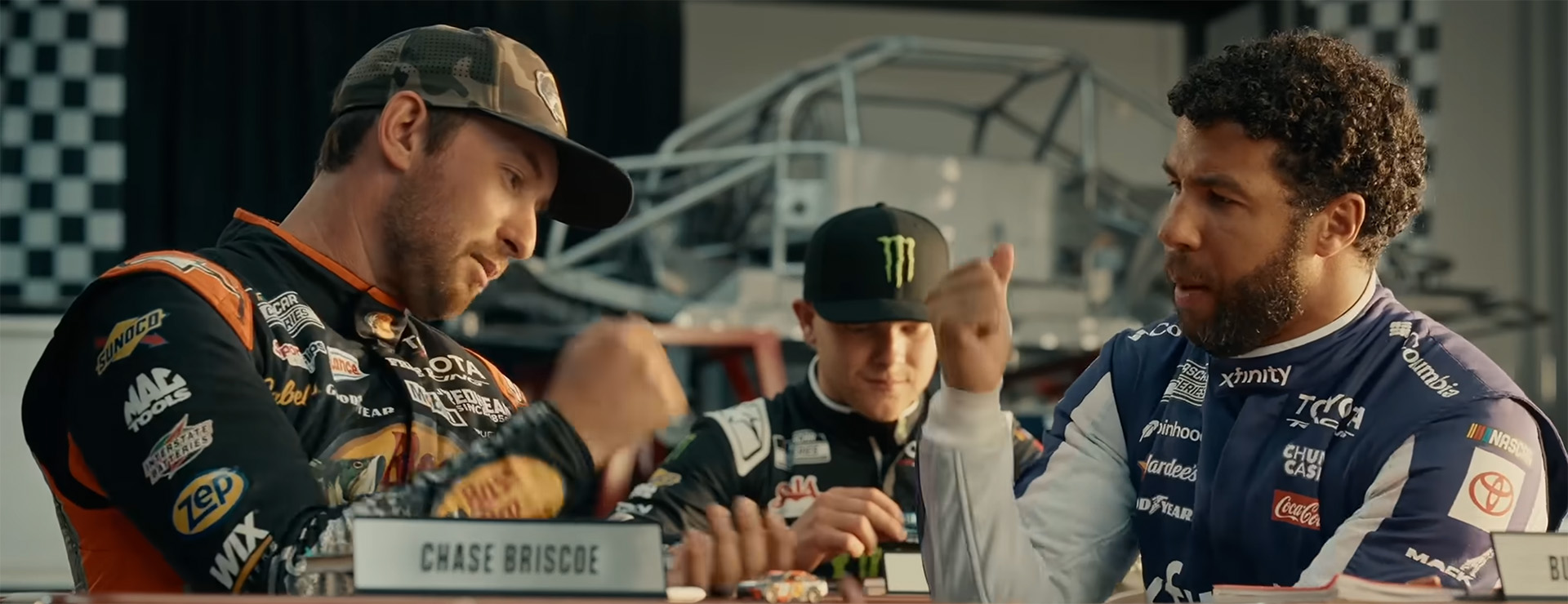
Additionally, this initiative provided an opportunity for us to go beyond CBS Entertainment and leverage the full power of Paramount—utilizing the reach and engagement across all our brands, including Paramount Plus, CBS News, CBS Sports, MTV, Nickelodeon, Comedy Central, BET and more—along with unique partnerships with Paramount Pictures IP and significant PR support. In all my years at the company, I’ve never seen us work together in such a cohesive and collaborative way to support a CBS property.
Spotlight: You and I have talked about this before, but Survivor has this amazing community of fans, many of whom have watched since the very beginning in 2000. In turn, honoring that fandom has been especially important to CBS and for the show in this special cycle. You guys have an overarching tagline, “In the Hands of the Fans,” so that partially answers this question, but how has CBS worked to incorporate fandom into both the show itself and the marketing?
Benson: The line “In the hands of the fans” actually came from Jeff Probst, the host and executive producer of Survivor. Jeff has been an amazing, collaborative partner and has played an integral role in our efforts at every step of the process. It was essential that our work remained in lockstep with the show. Tens of millions of Americans have watched Survivor over its 25-year history, so engaging its various fandoms was a key pillar of our strategy. While Jeff used “In the hands of the fans” as a framework for Survivor 50, our marketing campaign used “Light Your Torch” as a call to action—both to celebrate existing fans and to invite new viewers to participate in what promises to be a historic milestone.
Ultimately, we wanted to “fan the flames” of fandom to drive greater interest in the show and in this landmark moment in its history, appealing to both fans and non-fans alike.
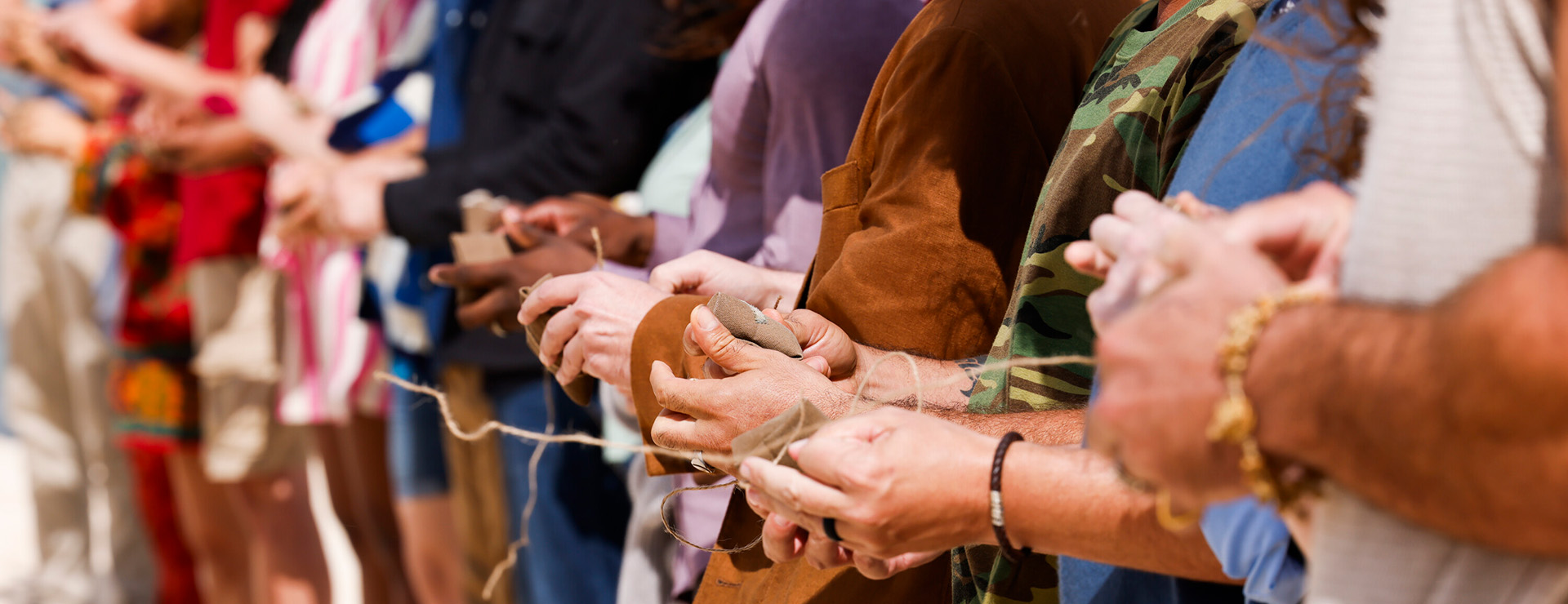
Spotlight: Along these lines, can you talk about the Survivor 50 Challenge and why you thought this was the right way to honor fans and to get them involved with the show? For those who don’t know, the Survivor 50 Challenge started on a web page. At a designated time, a clue would be released for each of the 50 states. People then knew when and where to line up to find the idol and take a selfie to submit to the show. The winner of the Survivor 50 Challenge wins a grand prize trip to the season finale.
The Survivor 50 Challenge came from our vision to create a campaign in which all of America could become part of Survivor in real life. Our intention was to honor the show and its fans, while also creating something in which anyone could participate. Since this is the 50th season of the show and there are 50 states in America, it felt natural to develop a challenge that brought Survivor to all 50 states. The goal was to celebrate this milestone season while creating unique opportunities in every state to experience a Survivor-inspired challenge, allowing anyone who participated to be part of this historic moment. Additionally, we created an integrated digital experience so anyone anywhere could play. The grand prize—a trip to attend the live finale of Survivor season 50—was designed to provide a strong incentive to drive participation.
Spotlight: With the season ready to premiere, idols have been found and selfies taken in all 50 states. How did you feel this contest went? What kind of engagement did it attract?
Benson: The 50-State Challenge has far exceeded our expectations, with enormous crowds lining up for hours at each location to participate. The planning and logistics for this effort were significant and took over a year to coordinate, but the results have been well worth it.
Whether in the midst of a snowstorm, on a moving train or in the middle of the Mall of America, excited crowds have gathered to celebrate the show. It has united people from all walks of life, each sharing their love for Survivor and their own unique stories about the role the show has played in their lives.
The entire effort has generated an enormous amount of earned media, scaling across our CBS affiliates, a wide range of PR outlets and, of course, social media. We couldn’t be more thrilled with the response, and Jeff is floored by what we’ve been able to accomplish.
Spotlight: You also worked with Bucket Listers to open a pop-up Ultimate Fan Cafe first in Boston and now in Miami. Why did you guys decide to do that and how has that experience gone so far?
Benson: We knew the fandom for this show was incredibly strong, so two years ago we began experimenting with real-life activations for Survivor. I like blending authentic IRL [in real life] experiences with our advertising efforts when it makes sense, and with each event we executed, the more fans responded in a positive way.
Bucket Listers was a great partner for us—they know how to create events that feel both special and authentic. We also knew there were large fandoms in Boston and Miami, so those locations made sense. What we didn’t expect with the 50-State Challenge was how much fandom exists in every state, far beyond a few select locations. That insight gives us valuable learnings as we consider how to continue developing audiences beyond season 50.
Spotlight: Not to spoil any surprises, but do you have any additional marketing experiences lined up for fans while Survivor 50 is on the air that you are willing to talk about?
Benson: Nothing I can talk about at this time. Good marketing needs to surprise the audience with something unexpected just as much as it needs to reach them!
Spotlight: I feel like a big part of the marketing for Survivor takes place “off your own air” so to speak, with the fandom producing so much of their own content – podcasts and so forth – around the show. How does CBS encourage that activity even if you aren’t directly managing it?
Benson: We take a highly integrated approach to our marketing, and while it may not always appear that we are involved in every aspect, we work to understand all dimensions of what is happening and look for opportunities to fan those flames whenever possible.
By collaborating closely with Jeff and the show, our PR team, programming and numerous other stakeholders, we are generally at the center of anything and everything designed to grow interest and fandom for the show, and we continually encourage fandom participation. Our focus is always on driving as much broadcast and streaming viewership as possible, while also thinking long term about lifecycle management of the IP and the brand.
Spotlight: You also seem to be really doubling-down on TikTok for Survivor 50. I’m sure you are also on all of the other social platforms as well but why did you guys decide to emphasize TikTok as a platform for this season and do you have a different team and strategy for each platform that you’re on?
Benson: Social media is a foundational pillar of our plan for Survivor 50. It has allowed us to scale every component of our campaign in ways that are meaningful and relevant to audiences who may not be watching CBS. Combined with the power and reach of CBS and our other Paramount brands, it enables us to create and build anticipation for the season premiere and beyond. It’s not just about how we use one platform like TikTok, but how all platforms work individually and collectively to help us tell the larger story of Survivor 50 and what it means to America. TikTok has been an important platform, but we think about how to best utilize any platform, from TikTok to Instagram, to CBS and Paramount Plus to provide the greatest efficacy from each and every platform in the campaign.
Spotlight: What do you think it means for CBS and Paramount Plus to have an event like this to play across multiple platforms – CBS primetime, streaming and social? How are you guys working to take advantage of all of this brand equity?
Benson: Survivor 50 is a milestone for the show, but also a milestone for CBS and Paramount as a company. It’s not often that you get an anniversary like this—especially for a show that fundamentally changed television 25 years ago. Everyone across the company recognizes that milestone, but more importantly, they recognize the opportunity to focus the full power of Paramount on something this special and how it can be a win for the entire organization, not just CBS. Yes, Survivor is an important primetime show for CBS, and we certainly want to drive the largest broadcast number possible, but we also know that Survivor is a strong engagement-driver for Paramount Plus, so our campaign also targets those viewers.
Ultimately, this is a milestone for the entire company and its success has a ripple effect that goes well beyond a primetime rating. I can tell you firsthand that all of Paramount is both invested in its success and proud of what we can accomplish as a more collaborative and unified team.